
my story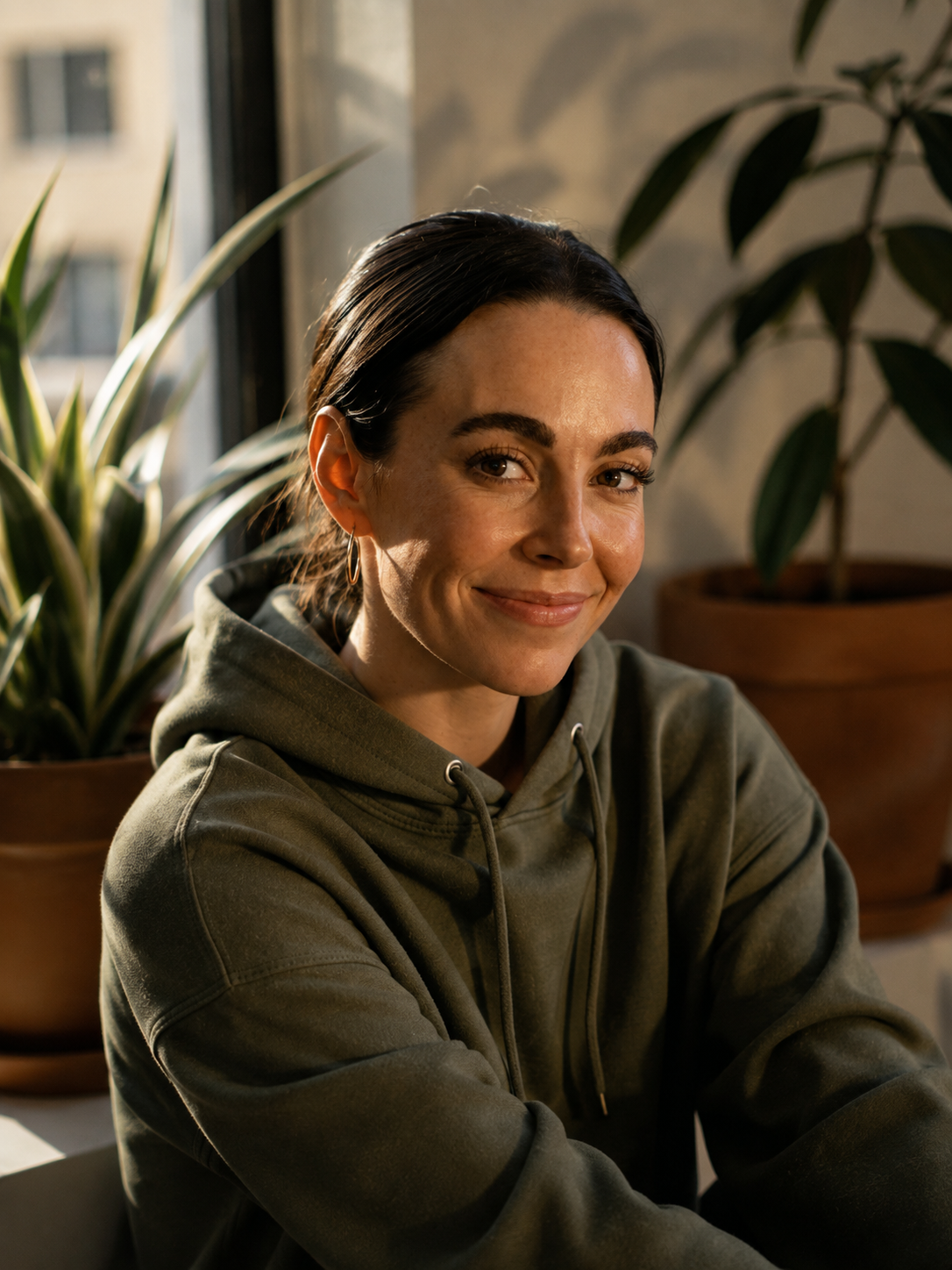
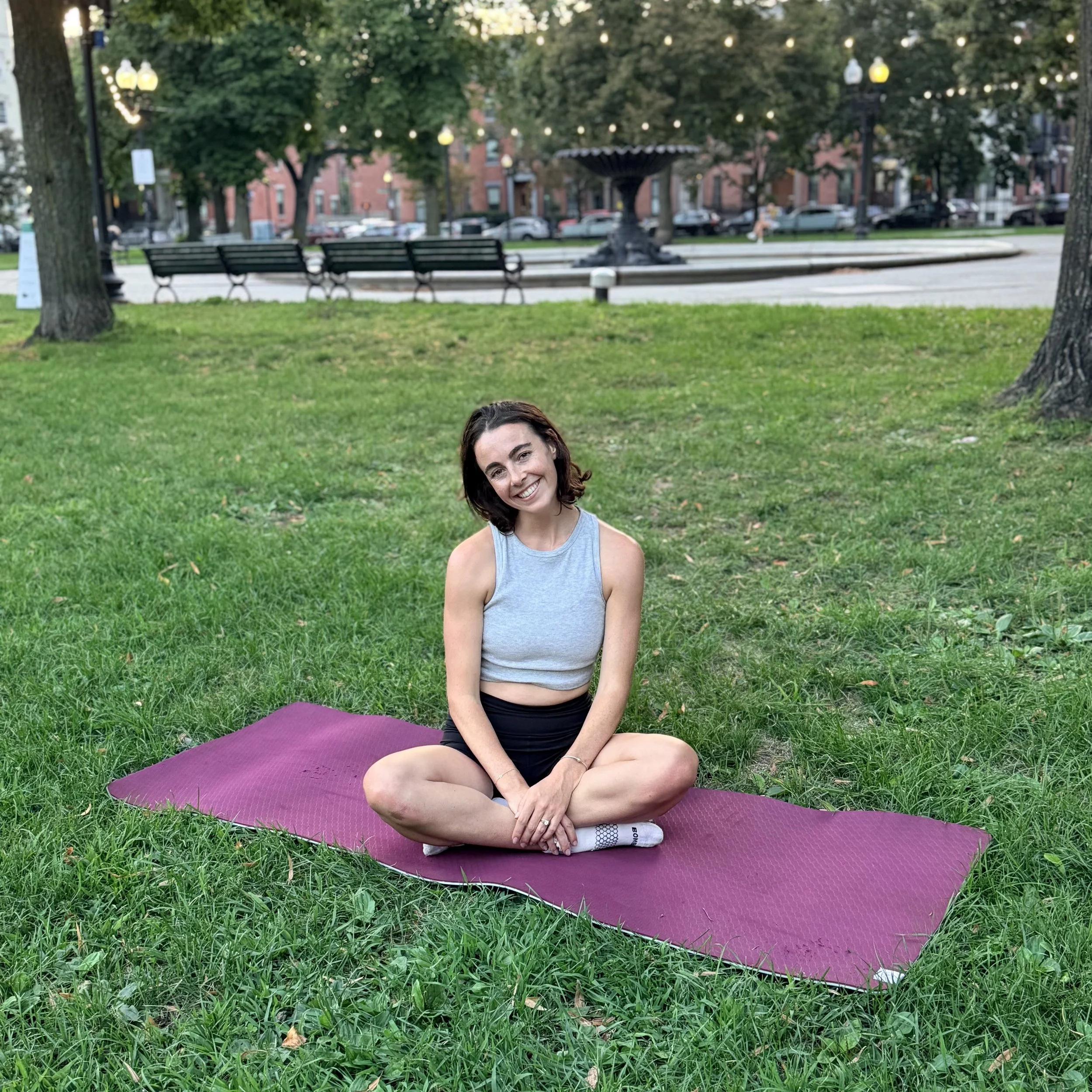
I spent the first decade of my career in the nonprofit sector, spanning refugee resettlement, global health, immigrant justice, and even a short stint in Rwanda with the Peace Corps (story for another time). While each role looked quite different, all of them centered around deep accompaniment - of families, of communities, of executives leading organizations, you name it. Alongside my full-time work, I was always juggling a handful of other pursuits - informally teaching yoga, learning languages, tutoring children and adults in ELL, providing childcare, and creating community ESL (spoiler alert, no one signed up for that one). This hodgepoge also included a year wanting to experience the world in different ways, including learning how to be a barista and waitress, working 6am-2am in cafes and high-end restaurants, and solo traveling to Colombia (many, many stories for another time).
While I openly affirmed my "all over the place" nature of being, looking back, I was following an inner voice I hadn't yet learned to trust - one that kept nudging me toward experiences that revealed where I felt most alive, most myself, and most at home in who I was becoming.
As I progressed in my career, I noticed my attention increasingly returning to the same place - not just what people did, but who they were beyond the roles they occupied. It didn't take long to realize these weren't the kinds of conversations most workplaces were designed to have, despite quietly shaping how people lived and worked: what mattered deeply to someone, what they were carrying beneath the surface, what gave them energy or quietly depleted it, and what parts of themselves came alive - or became quieter - when they walked through the door.
As it goes, life then kindly and disruptively invited me into those same questions myself. My life looked exactly as I had hoped it would - I had meaningful work, incredible relationships, and was doing everything I believed I was supposed to do while caring deeply about it all. And yet, I found myself continually chasing some imagined version of "there" - the next job, the next accomplishment, the next milestone - without ever stopping to ask whether "there" was somewhere I actually wanted to go, or why arriving never seemed to feel the way I imagined it would.
Like many of us do, I looked outside myself for the answer. Therapy helped me understand my thinking patterns. Yoga and meditation introduced me to my inner world. Endless conversations with coworkers, friends, and family invited me to imagine a future that actually felt like my own. Against every fiber of my being, I decided to invest in a coach myself - an investment I now attribute to changing the trajectory of my life.
Each gave me something I genuinely needed. It wasn't the insights that were missing - it was my ability to translate them into everyday life. I'd leave therapy with clarity, yoga with a deeper connection to myself, and coaching with possibility, only to find myself back in my head by Tuesday afternoon, trying to think my way toward a feeling I could never fully and freely embody.
Slowly, the threads began weaving together. The work I'd loved professionally, the questions I was wrestling with personally, and the practices that had supported me all pointed toward the same realization:
How we relate to ourselves while we live our lives matters just as much as what we're working toward.After years of becoming increasingly self-aware, I realized that understanding myself wasn't the same as being able to live differently. I could name my patterns, understand where they came from, and recognize them as they were happening—and still find myself caught in the same cycles of anxiety and survival.
The missing piece wasn't more insight or self-improvement. It was learning how to extend that awareness beyond my thinking mind and into my inner world: to understand what my nervous system was communicating, befriend my body as a trusted source of information rather than something to manage or improve, and gradually learn to live with greater mind-body cohesion rather than disconnection.
Beyond my own experience, I began to realize that like many of us don't need more external voices offering advice, answers, or reasons - we need a different kind of space, with an entirely different goal. One where cognitive conversation and the wisdom of the body aren't separate, and where insight doesn't simply stay insight, but gradually becomes embodied. Through that process, we begin building a relationship with ourselves we can actually trust - one that allows us to live more from the inside out, rather than continually looking outside ourselves for direction. And over time, the work begins to show up beyond the therapy room or yoga class: on an ordinary Tuesday afternoon when you suddenly notice that something in you feels a little safer, freer, or more like yourself.
The Accompaniment Practice grew from that realization - and from a desire to create the kind of space I had spent years searching for myself. To create what I wish existed.
I bring together everything I've learned through my professional study of somatic coaching and my own deeply human experience of becoming, unbecoming, and feeling myself what it means to inhabit my body - a process that, as we all know, never really ends - into one integrated practice designed to help people cultivate a relationship with themselves they can trust and return to again and again.
My hope is that relationship becomes something you carry into every room you enter - whether you're leading a company, working a night shift, raising children, navigating change, or simply trying to decide what comes next. Because I believe the way we relate to ourselves doesn't stay contained within us; it shapes how we lead, love, parent, work, create, and contribute to the lives and the world around us.
By now, I hope I've conveyed that my practice is less about arriving "there" or finally "figuring it out." In a world of endless external advice about how to live, heal, succeed, or be more regulated, this work is about learning to turn inward—to be in deep conversation with ourselves as we navigate the questions, trust what we find there, and increasingly live from the fullest expression of who we are.The Accompaniment Practice - named after what it is, a practice - is simply an invitation to do just that, together.
Outside of this work, you'll most likely find me talking about it (!), exploring a new wine bar, practicing or teaching yoga, (trying to) read(ing) with Bravo in the background, or happily eating my way through both Sour Patch Kids and CSA veggies.
Why “The Accompaniment Practice”?
Early in my career, I found language for something I had already been instinctively drawn toward: accompaniment. Rooted in liberation theology through Gustavo Gutiérrez and later embodied by Dr. Paul Farmer — whose work I studied as an undergraduate and was eventually fortunate enough to support professionally — accompaniment offered a way of supporting others that profoundly resonated with me. Rather than fixing, solving, or leading from the front, accompaniment is the practice of faithfully walking alongside another person with humility, presence, and a deep respect for and deference to their dignity and agency.
That principle became the thread running through every chapter of my career before I ever realized it - and ultimately the foundation upon which I created The Accompaniment Practice.
At the heart of this practice is a simple belief: when people feel supported enough to live more fully as themselves — and contribute what they're uniquely here to contribute — we all benefit. Training and Ongoing Learning
Somatic CoachingThe Somatic School (UK) - (May-November 2026)
ICF-accredited body-oriented coaching certification integrating neuroscience, nervous system regulation, embodied inquiry, trauma-informed coaching, and somatic practices. This training emphasizes lasting change through the integration of cognitive reflection and embodied experience. The Somatic School is currently the world's only ICF-accredited body-oriented coaching certification.
Yoga Hands-On AssistantDown Under School of Yoga
Training in consent-based, trauma-informed hands-on assists designed to deepen students' awareness, safety, and embodied experience. Emphasis on skillful observation, presence, communication, anatomical integrity, and using touch as an invitation rather than a correction. Trained under master teacher Masaaki Okamura.
Embodiment & Nervous System LiteracyEmbodied Mastermind by Sarah Singer & Becky Evans (June ‘26 - January ‘27)
Advanced training exploring the intersection of embodiment, nervous system literacy, and purpose-driven business building. Focused on cultivating sustainable ways of creating, leading, and making decisions without abandoning embodied values or well-being.
Continuing training in somatic studyThe Embody Lab Member
Continuing education in somatics, trauma healing, polyvagal theory, and embodied coaching, including:
Somatic Trauma Healing Summit (16 hrs)
The Body Keeps the Score: The Science of Trauma (8 hrs)
Somatic Experiencing Tools for Shame & Collapse — Dr. Peter Levine (8 hrs)
Applied Polyvagal Theory in Action — Dr. Arielle Schwartz (8 hrs)
The Mind-Body Coaching Summit
The Nervous System Reset: Polyvagal Tools for Safety, Connection & Resilience
Embodied Intimacy Summit
Somatic MovementDown Under School of Yoga & J.P. Centre Yoga (upcoming, 2027)
Restorative Yoga Teacher Training and Restorative Assists Skills Training, deepening my practice of consent-based, trauma-informed touch, restorative movement, and embodied approaches that support nervous system regulation and rest.
The Class Field Study (upcoming, September 2026)
Immersive study in music-driven, intuitive movement and embodied facilitation, exploring movement as a pathway for self-awareness, emotional expression, nervous system connection, and a more felt relationship with the body.